Richard Kruml

Richard Kruml

Chokotei TOSHIMASA (Active c 1810s)
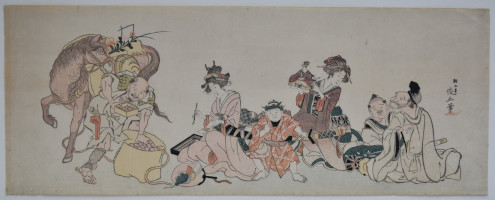
Click here to view image full size. A long surimono for a Horse year (probably 1810). Shows the Five Festivals, Gosekku no uchi, which are: Matsu-no-uchi, New Year; Hinamatsuri, Girls’ Day, or Doll Festival; Tango-no-sekku, Boys’ Day; Tanabata, Star Festival;…
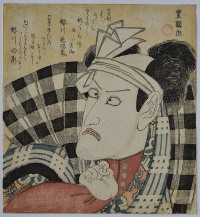
Utagawa TOYOKUNI II (1777-1835)

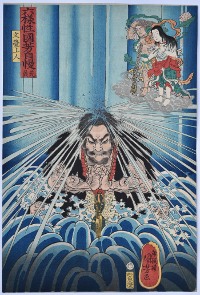
 Click here to view image full size. A surimono showing a bust portrait of the actor Ichikawa Danjuro VII as Kanawa no Goro, a retainer of Kamatari no Fujiwara, disguised as the fisherman Fukashichi from the Mikasayama Goten scene in…

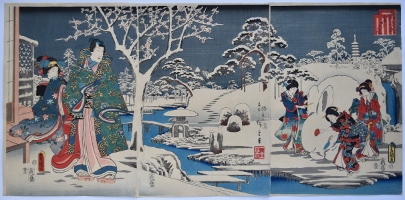
Utagawa KUNISADA (1786-1864)

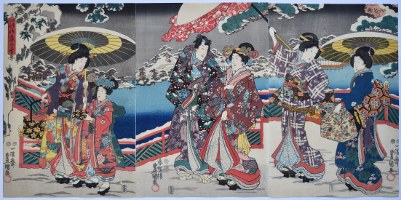
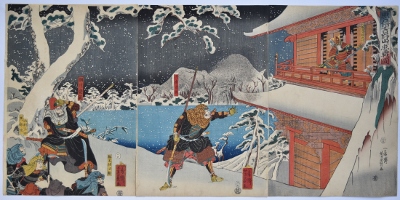
 Click here to view image full size. Winter from a set of the four seasons showing Prince Genji and attendants in the snow-covered grounds of a palace. Published by Enshuya Hikobei, c 1849-50.   Fine impression and colour. Slight trimming,…

Utagawa TOYOKUNI I (1769-1825)

 Click here to view image full size. A surimono in the form of an ema (literally “picture-horse”) which were votive tablets left at Shinto shrines. The upper right plaque shows an actor in Shibaraku role with characters reading ganshu (temple…

Ichiryusai HIROSHIGE (1797-1858)

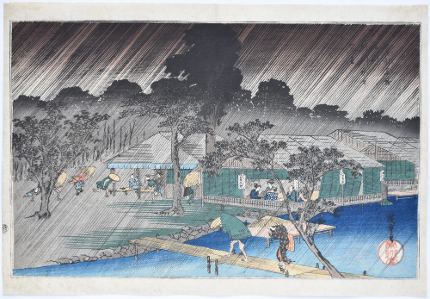
 Click here to view image full size. Tadasugawara no yudachi, “Evening Shower on the bank of the Tadasu River” from the early set Kyoto meisho no uchi, “Famous Views of Kyoto.” The set of ten masterpieces was published by Eisendo,…

Utagawa TOYOKUNI I (1769-1825)

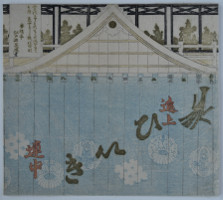
Click here to view image full size. Click here to view image full size. An extremely rare and unusual e-goyomi surimono for the year of the Horse, 1822, the long and short months running along the top of the theatre…

Totoya HOKKEI (1780-1850)

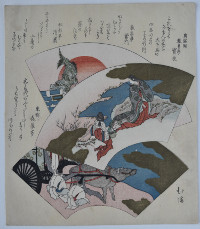
Click here to view image full size. A surimono showing three overlapping fans. The top fan shows the first sunrise of the new year behind a shachi on a castle roof. Usually called dolphins, they in fact had the head…

Yashima GAKUTEI (1786-1868)

 Click here to view image full size. A surimono – one of a series that Gakutei designed in the curved shape of a folding fan. Shows a seated poet before Mt. Fuji holding a fan and dressed in courtly robes…

Ichiryusai HIROSHIGE (1797-1858)

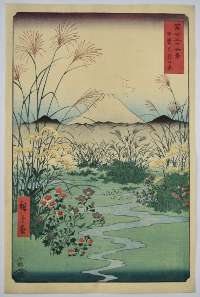
 Click here to view image full size. Kai Otsuki no hara, “The Otsuki Plain in Kai Province”. A meandering stream with flowers and pampas grass from Fuji sanjurokkei, “Thirty-six Views of Fuji” published by Tsutaya Kichizo, 1858. The set was…

Ichiryusai HIROSHIGE (1797-1858)

 Click here to view image full size. Ishiyama no shugetsu, “Autumn Moon at Ishiyama” from a set of prints Omi hakkei no uchi, “Eight Views in Omi Province.” Shows Lake Biwa with Seta Bridge and Mount Hira in the distance.…

Ichiryusai HIROSHIGE (1797-1858)

 Click here to view image full size. The year-end festival, Toshi-no-ichi, at Asakusa, Edo. This Buddhist temple was dedicated to bodhisattva Kannon. From the set Rokuju yoshu meisho zue, “Famous Places in the Sixty-odd Provinces.” Published by Koshimuraya Heisuke between…

Ichiryusai HIROSHIGE (1797-1858)

 Click here to view image full size. Wakasa, gyosen karei ami, catching flatfish in Wakasa Province. From the set Rokuju yoshu meisho zue, “Famous Places in the Sixty-odd Provinces.” Published by Koshimuraya Heisuke between 1853-1856 (this being 1853). This province…

Ichiryusai HIROSHIGE (1797-1858)

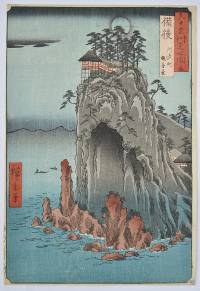
 Click here to view image full size. Bingo Abumon Kannondo. The temple of Kannon at Abumon, Bingo Province. From the set Rokuju yoshu meisho zue, “Famous Places in the Sixty-odd Provinces.” Published by Koshimuraya Heisuke between 1853-1856 (this being 1853).…