Utagawa KUNIYOSHI (1797-1861)
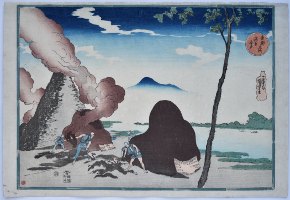
Click here to view image full size. Asakusa Imado from a Toto meisho set of ten prints published c. 1834. Shows three men stoking the ceramic tile kilns at Imado on the bank of the Sumida river. Mount Tsukuba can…

Dealing in fine Japanese prints, paintings and books since 1968
Dealing in fine Japanese prints, paintings and books since 1968

Click here to view image full size. Asakusa Imado from a Toto meisho set of ten prints published c. 1834. Shows three men stoking the ceramic tile kilns at Imado on the bank of the Sumida river. Mount Tsukuba can…
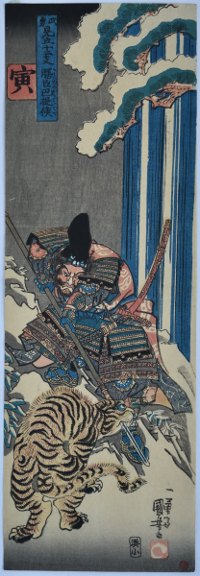
Click here to view image full size. Tiger from a chu-tanzaku set of twelve prints Buyu mitate junishi, “Chosen Heroes for the Twelve Signs.” Based on the Chinese zodiac system of twelve animals. Shows Kashiwade no Omi Hatebe (sic, usually…
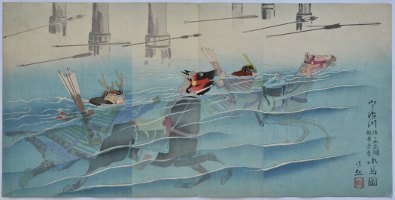
Click here to view image full size. A triptych, Ujigawa Kajiwara Kagesue, Sasaki Takatsuna, miju uma. Yoshitsune is informed that Kiso no Yoshinaka is entrenched behind the natural defence of the Uji river, then in full flood. Yoshitsune calls on…
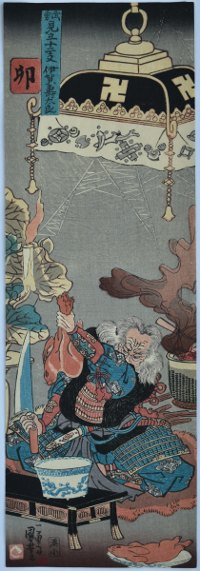
Click here to view image full size. Hare from a chu-tanzaku set of twelve prints Buyu mitate junishi, “Chosen Heroes for the Twelve Signs.” Based on the Chinese zodiac system of twelve animals. Shows Iga Jutaro, the elderly retainer of…
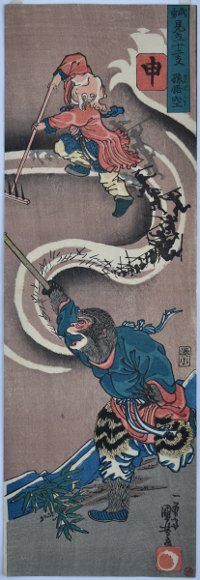
Click here to view image full size. Monkey from a chu-tanzaku set of twelve prints Buyu mitate junishi, “Chosen Heroes for the Twelve Signs.” Based on the Chinese zodiac system of twelve animals. Shows the Monkey King, Songoku (Sun Wu…
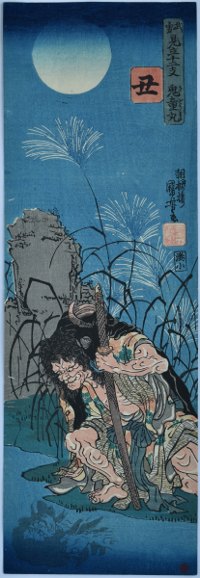
Click here to view image full size. Ox from a chu-tanzaku set of twelve prints Buyu mitate junishi, “Chosen Heroes for the Twelve Signs.” Based on the Chinese zodiac system of twelve animals. Shows the robber Kidomaru under a buffalo…
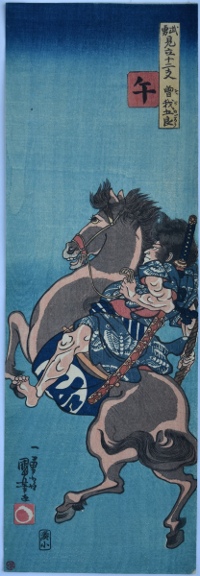
Click here to view image full size. Horse from a chu-tanzaku set of twelve prints Buyu mitate junishi, “Chosen Heroes for the Twelve Signs.” Based on the Chinese zodiac system of twelve animals. Shows Soga Goro (Tokimune) galloping from Hakone…
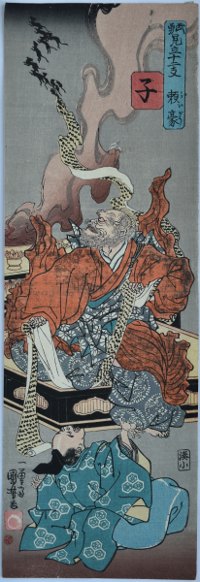
Click here to view image full size. Rat from a chu-tanzaku set of twelve prints Buyu mitate junishi, “Chosen Heroes for the Twelve Signs.” Based on the Chinese zodiac system of twelve animals. Shows Raigo Ajari at the Onjoji monastery,…
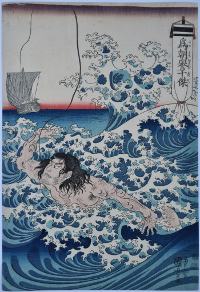
Click here to view image full size. Shows Tametomo’s faithful retainer Kiheiji who is left behind by mistake when Tametomo sails for Japan from the Ryukyu Islands. He throws a weighted rope the immense distance to the ship and is…
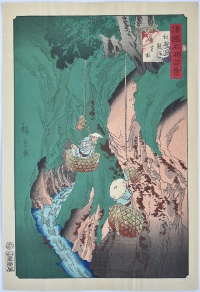
Click here to view image full size. Gathering iwatake, rock tripe or rock mushrooms in Kii Province. The common name for various edible lichens that grow on cliffs. The gatherers used precarious baskets that were hauled up and down the…

Click here to view image full size. An extremely rare chu-tanzaku, Fuyu Sumidagawa no yuki, “Winter Snow on the Sumida River.” From a set Shiki Edo meisho, “Famous Places in Edo in the Four Seasons.” A lone figure in straw…

Click here to view image full size. Tominomori Sukeemon Masakata, one of the famed Forty-seven Ronin, sword drawn, during the famous night attack on the house of Kono Moronao. The hanging bell, above, was an early intruder alarm system. (Interestingly,…
Click here to view image full size. “Evening Snow at Uchikawa”, Uchikawa bosetsu from the early set Kanazawa hakkei, “Eight Views in Kanazawa” published by Koshimuraya Heisuke, c 1835-6. This is an extremely rare and fine set and examples in…
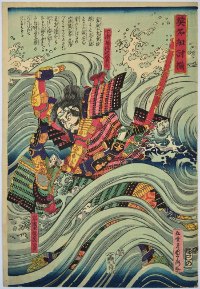
Click here to view image full size. Iwanari Chikara no Suke and Shimozu Gonnai struggling in the water from Eimei kumiuchi soroi, “A Series of Famous Fighting Warriors.” Published by Moriya Jihei, 1865. Fine impression, colour and condition. Signed…

Click here to view image full size. Sagaminokami Hojo Takatoki warding off a group of tengu with his fan. From the fine set Yoshitoshi mushaburui, “Yoshitoshi’s Courageous Warriors.” Published by Kobayashi, 1883-1886 (this being 1883). Fine impression and colour.…

Click here to view image full size. Sano Genzaemon cutting his potted trees to warn Hojo Tokiyori. From the fine set Yoshitoshi mushaburui, “Yoshitoshi’s Courageous Warriors.” Published by Kobayashi, 1883-1886 (this being 1883). Fine impression and colour. Light toning,…

Click here to view image full size. Danjo Matsunaga Hisahide preparing to commit suicide. From the fine set Yoshitoshi mushaburui, “Yoshitoshi’s Courageous Warriors.” Published by Kobayashi, 1883-1886 (this being 1883). Fine impression and colour. Light toning, otherwise fine condition.…

Click here to view image full size. Kuro Hangan Yoshitsune and Notonokami Noritsune fighting on a ship’s prow. From the fine set Yoshitoshi mushaburui, “Yoshitoshi’s Courageous Warriors.” Published by Kobayashi, 1883-1886 (this being 1886). Fine impression and colour. Light…
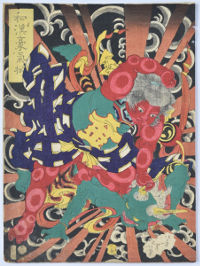
Click here to view image full size. A chuban print from a set Wakan goki zoroi, “Valour in China and Japan.” Shows Kintaro about to deliver a blow to the Thunder God Raijin (the God of thunder and lightning –…

Click here to view image full size. A samurai helmet maker (kabuto) from a series of surimono Shokunin sanjurokuban, “Thirty-six Poets as Craftsmen.” Issued for the Asakusagawa Club in 1802. Hand-stamped series title top right. Sori was a pupil of…
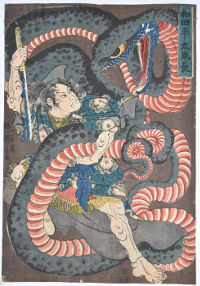
Click here to view image full size. Wada Heita Tanenaga (1182-1213), short sword in hand, struggling with a giant python. He was a renowned archer and retainer of Minamoto no Yoriie. Various stories tell of how he came across the…
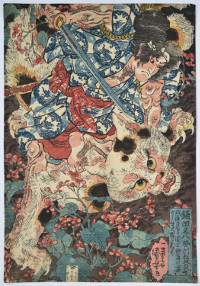
Click here to view image full size. Kamada Matahachi of Matsusaka in Ise Province killing a monstrous cat. These mountain cats – nekomata – were reputed to eat humans. Published by Tsutaya Kichizo, c. 1840. Robinson S1e.3. A wonderful and…
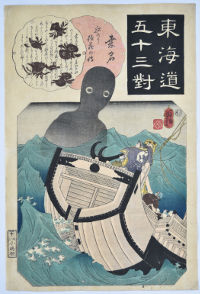
Click here to view image full size. The apparition of the Sea Monk, Umibozu, looming above the sailor Kawanaya Tokuzo. The best design from Tokaido gojusan tsui, Station 41, Kuwana. The legend has it that Tokuzo, against the advice of…
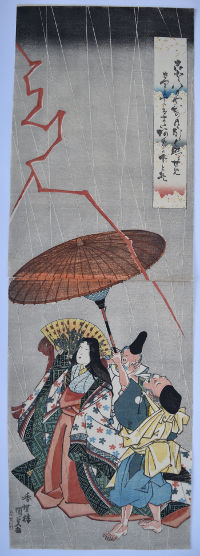
Click here to view image full size. A vertical diptych showing the famous waka poet Ono no Komachi (c. 1825-c. 900) being sheltered by attendants from an upcoming storm. She is famous for composing a poem and praying for rain…
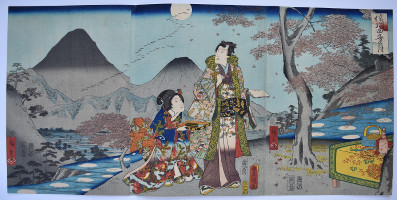
Click here to view image full size. A triptych Shinshu Sarashina tagoro no tsuki, “The Moon Reflected in the Rice Fields at Sarashina, Shinano Province.” Shows Mitsuuji, the romantic hero of the Inaka Genji (“A Rustic Genji”), admiring the multiple…
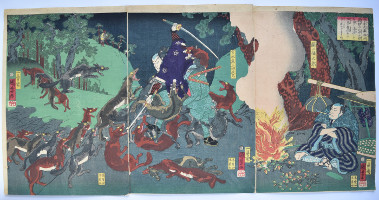
Click here to view image full size. A triptych showing Miyamoto Mushashi (c. 1584-1645) fighting a pack of wolves in the mountains of Hakone watched by Sekiguchi Yataro seated beside a fire. Musashi was a renowned double-bladed swordsman (as seen…
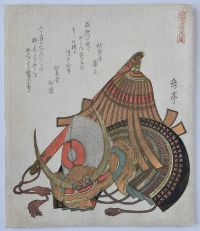
Click here to view image full size. Best known for his surimono although he produced fine paintings, some good landscapes and was also known as a poet. A surimono, one of a set of two on the martial arts of…
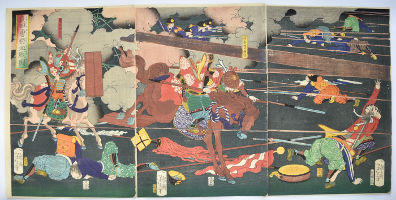
Click here to view image full size. Click here to view image full size. A complete hexaptych (six-sheet) design comprising two triptychs: Kawanakajima okassen no zu, “The Great Battle of Kawanakajima,” published by Tsujibun, 6/1866 and Takeda yusho kessen no…
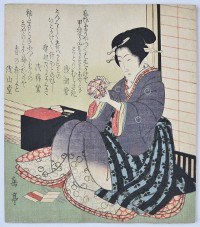
Click here to view image full size. Best known for his surimono although he produced fine paintings, some good landscapes and was also known as a poet. A surimono showing a young mother making a temari ball. This form of…
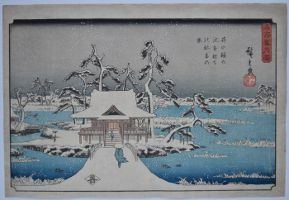
Click here to view image full size. A snow scene showing the Inokashira Benten Shrine and Inokashira Pond, Inokashira no ike Benzaiten no Yashiro no kei from a set Meisho setsugekka, “Famous Places of Snow, Moon and Flowers.” The pond…