Utagawa KUNIYOSHI (1798-1861)

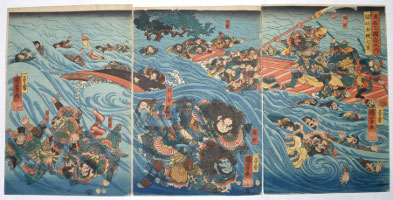
 Click here to view image full size. Kwanyu ( Chin. Kwan Yu ), the celebrated warrior who was deified in 1591 as Kwan Ti, the God of War. Shows the warrior standing on a partially submerged boat, far right, with his long black beard and carrying a huge halberd overlooking the river battle with the Seven Armies of Gi ( Wei ). Published by Tsutaya Kichizo 1854. Very good impression, colour and condition. Full size. Signed Ichiyusai Kuniyoshi ga. Status: Sold
Utagawa KUNIYOSHI (1797-1861)

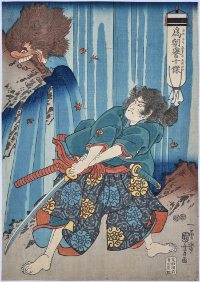
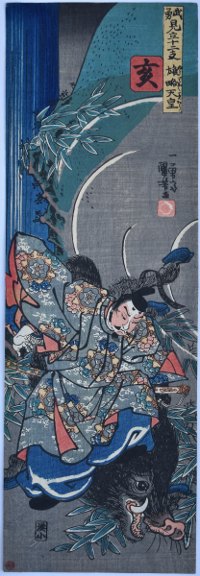
 Click here to view image full size. Boar from a chu-tanzaku set of twelve prints Buyu mitate junishi, “Chosen Heroes for the Twelve Signs.” Based on the Chinese zodiac system of twelve animals. Shows Yuryaku Tenno, the 21st Emperor (457-480) by a waterfall killing a huge boar. Said to have occurred at Mount Katsuragi in 461. Published by Minatoya Kohei, c. 1840.   Very good impression and colour. Minimal trimming, otherwise very good condition. Signed Ichiyusai Kuniyoshi ga.   Status: Sold  
Utagawa KUNIYOSHI (1797-1861)

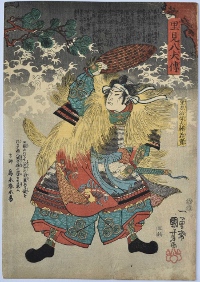
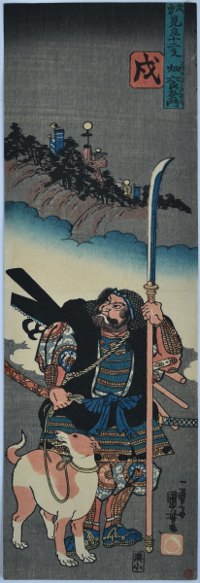
 Click here to view image full size. Dog from a chu-tanzaku set of twelve prints Buyu mitate junishi, “Chosen Heroes for the Twelve Signs.” Based on the Chinese zodiac system of twelve animals. Shows Hata Rokurozayemon, a follower of Nitta Yoshisada, with an array of weapons and accompanied by his dog. Published by Minatoya Kohei, c. 1840.   Very good impression and colour. Minimal trimming, otherwise very good condition. Signed Ichiyusai Kuniyoshi ga.   Status: Sold  
Utagawa KUNIYOSHI (1797-1861)

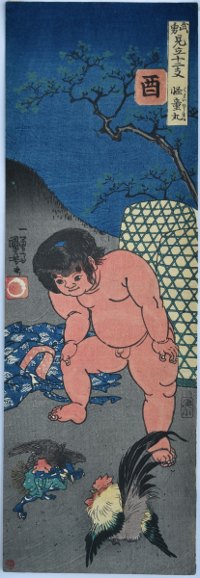
 Click here to view image full size. Cock from a chu-tanzaku set of twelve prints Buyu mitate junishi, “Chosen Heroes for the Twelve Signs.” Based on the Chinese zodiac system of twelve animals. Shows Kwaido Maru, the boy Kintoki, umpiring a match between a cock and a young tengu. Published by Minatoya Kohei, c. 1840.   Very good impression and colour. Minimal trimming, otherwise very good condition. Signed Ichiyusai Kuniyoshi ga.   Status: Sold  
Utagawa KUNIYOSHI (1797-1861)

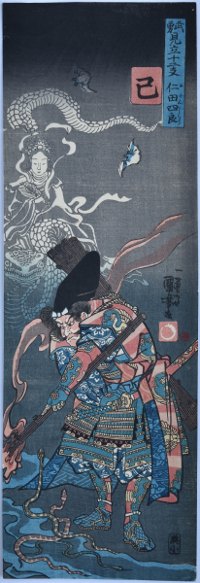
 Click here to view image full size. Snake from a chu-tanzaku set of twelve prints Buyu mitate junishi, “Chosen Heroes for the Twelve Signs.” Based on the Chinese zodiac system of twelve animals. Shows Nitta Shiro (Tadatsune) inside Mount Fuji during Yoritomo’s hunting party (1193) encountering snakes and a vision of the goddess of the mountain. Published by Minatoya Kohei, c. 1840.   Very good impression and colour. Minimal trimming, otherwise very good condition. Signed Ichiyusai Kuniyoshi ga.   Status: Sold  
Utagawa KUNIYOSHI (1797-1861)

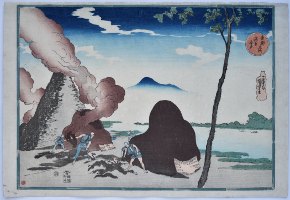
 Click here to view image full size. Asakusa Imado from a Toto meisho set of ten prints published c. 1834. Shows three men stoking the ceramic tile kilns at Imado on the bank of the Sumida river. Mount Tsukuba can be seen in the distance. The kilns were fuelled by pine needles, a stack of which can be seen on the left. This set, and other landscapes by Kuniyoshi, are characterised by strong western-style elements – shadows and clouds derived from viewing imported prints and books from Europe. Published by Kagaya Kichibei, c. 1834. Provenance: Ex B.W.Robinson collection (purchased privately). Very rare.   Fine impression, colour and condition. The green bamboo border intact. The set is well known for having this border trimmed off, partially or completely. Signed Ichiyusai Kuniyoshi ga.   Status: Sold  
Utagawa KUNIYOSHI (1797-1861)

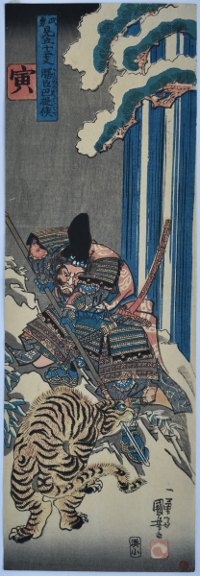
 Click here to view image full size. Tiger from a chu-tanzaku set of twelve prints Buyu mitate junishi, “Chosen Heroes for the Twelve Signs.” Based on the Chinese zodiac system of twelve animals. Shows Kashiwade no Omi Hatebe (sic, usually Hadesu) engaging with a tiger that had killed his daughter. Published by Minatoya Kohei, c. 1840.   Very good impression and colour. Minimal trimming, otherwise very good condition. Signed Ichiyusai Kuniyoshi ga.   Status: Sold  
Utagawa KUNIYOSHI (1797-1861)

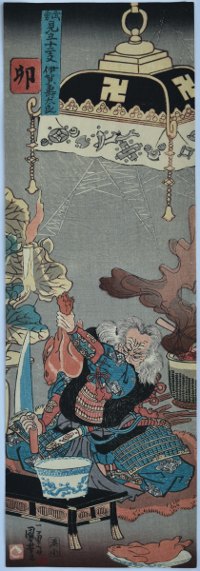
 Click here to view image full size. Hare from a chu-tanzaku set of twelve prints Buyu mitate junishi, “Chosen Heroes for the Twelve Signs.” Based on the Chinese zodiac system of twelve animals. Shows Iga Jutaro, the elderly retainer of Soma Yoshikado, sacrificing a hare in a Buddhist temple. Published by Minatoya Kohei, c. 1840.   Very good impression and colour. Minimal trimming, otherwise very good condition. Signed Ichiyusai Kuniyoshi ga.   Status: Sold  
Utagawa KUNIYOSHI (1797-1861)

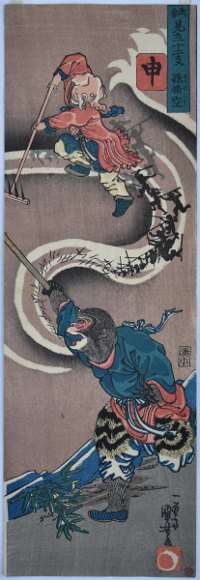
 Click here to view image full size. Monkey from a chu-tanzaku set of twelve prints Buyu mitate junishi, “Chosen Heroes for the Twelve Signs.” Based on the Chinese zodiac system of twelve animals. Shows the Monkey King, Songoku (Sun Wu K’ung) conjuring up an army of monkeys to attack his enemy the pig. Published by Minatoya Kohei, c. 1840.   Very good impression and colour. Minimal trimming, otherwise very good condition. Signed Ichiyusai Kuniyoshi ga.   Status: Sold  
Utagawa KUNIYOSHI (1797-1861)

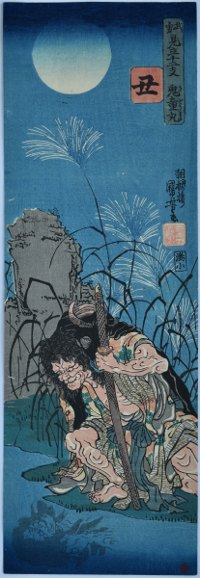
 Click here to view image full size. Ox from a chu-tanzaku set of twelve prints Buyu mitate junishi, “Chosen Heroes for the Twelve Signs.” Based on the Chinese zodiac system of twelve animals. Shows the robber Kidomaru under a buffalo hide looking at his reflection in water while attempting to ambush and kill Raiko. Published by Minatoya Kohei, c. 1840.   Very good impression and colour. Minimal trimming, otherwise very good condition. Signed Ichiyusai Kuniyoshi ga.   Status: Sold  

Utagawa KUNIYOSHI (1797-1861)

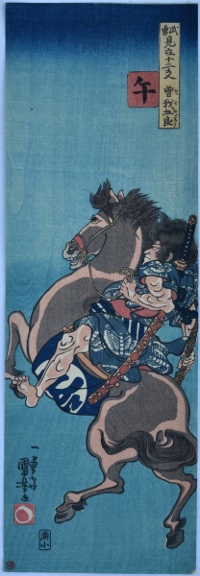
 Click here to view image full size. Horse from a chu-tanzaku set of twelve prints Buyu mitate junishi, “Chosen Heroes for the Twelve Signs.” Based on the Chinese zodiac system of twelve animals. Shows Soga Goro (Tokimune) galloping from Hakone to Mount Fuji to meet his brother Juro and fulfill their revenge in the course of Yoritomo’s great hunting party in 1193. Published by Minatoya Kohei, c. 1840.   Very good impression and colour. Minimal trimming, otherwise very good condition. Signed Ichiyusai Kuniyoshi ga.   Status: Sold  

Utagawa KUNIYOSHI (1797-1861)

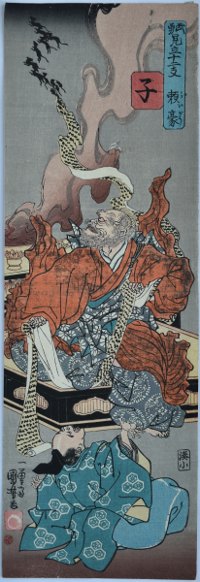
 Click here to view image full size. Rat from a chu-tanzaku set of twelve prints Buyu mitate junishi, “Chosen Heroes for the Twelve Signs.” Based on the Chinese zodiac system of twelve animals. Shows Raigo Ajari at the Onjoji monastery, Miidera, turning the Buddhist scriptures into rats. Oye no Masafusa looks on in dismay. Published by Minatoya Kohei, c. 1840.   Very good impression and colour. Minimal trimming, otherwise very good condition. Signed Ichiyusai Kuniyoshi ga.   Status: Sold  

Utagawa KUNIYOSHI (1797-1861)

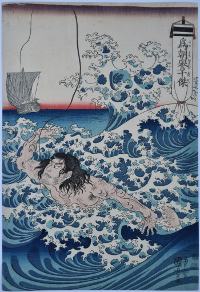
 Click here to view image full size. Shows Tametomo’s faithful retainer Kiheiji who is left behind by mistake when Tametomo sails for Japan from the Ryukyu Islands. He throws a weighted rope the immense distance to the ship and is hauled in. The best design from Tametomo homare no jikketsu, “Ten Famous Excellences of Tametomo.” A set of ten prints published by Aritaya Seiyemon, c. 1848-51.   Fine impression and colour. Slight trimming, otherwise very good condition. Signed Ichiyusai Kuniyoshi ga.   Status: Sold  

Utagawa KUNIYOSHI (1797-1861)

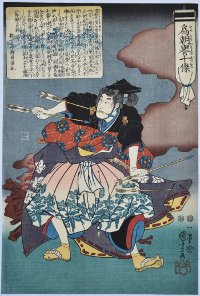
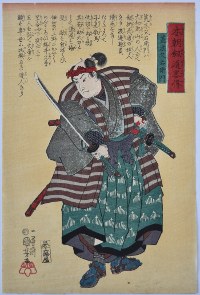
 Click here to view image full size. Tominomori Sukeemon Masakata, one of the famed Forty-seven Ronin, sword drawn, during the famous night attack on the house of Kono Moronao. The hanging bell, above, was an early intruder alarm system. (Interestingly, it’s also said that squeaks were deliberately incorporated into wooden floors for the same reason.) This unusual western-style set is also rare in having the printer’s name, Ohisa Daiihitsu, on five (including this) of the twelve prints in the set. Published by Sumiyoshiya Masagoro, 1852.   Fine impression and colour. Slight trimming, otherwise very good condition. Signed Kuniyoshi ga.   Status: Sold  

Utagawa KUNIYOSHI (1797-1861)

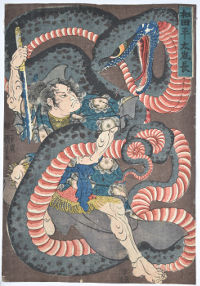
Click here to view image full size. Wada Heita Tanenaga (1182-1213), short sword in hand, struggling with a giant python. He was a renowned archer and retainer of Minamoto no Yoriie. Various stories tell of how he came across the python in a cave or saved a village from its carnivorous attacks. From an untitled early set published by Yamashiroya Heisuke, c. 1845. Robinson S1f.8. A striking design and rare.     Very good impression and colour. Slight trimming, otherwise very good condition. Signed Ichiyusai Kuniyoshi ga.     Status: Sold

Utagawa KUNIYOSHI (1797-1861)

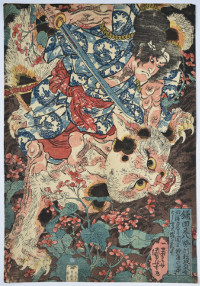
Click here to view image full size. Kamada Matahachi of Matsusaka in Ise Province killing a monstrous cat. These mountain cats – nekomata – were reputed to eat humans. Published by Tsutaya Kichizo, c. 1840. Robinson S1e.3. A wonderful and rare design.     Very good impression and colour. Repair bottom right corner and slight trimming, otherwise good condition. Signed Ichiyusai Kuniyoshi ga.     Status: Sold

Utagawa KUNIYOSHI (1797-1861)

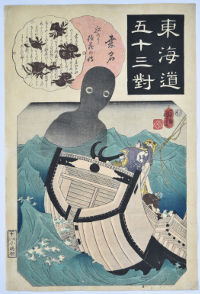
Click here to view image full size. The apparition of the Sea Monk, Umibozu, looming above the sailor Kawanaya Tokuzo. The best design from Tokaido gojusan tsui, Station 41, Kuwana. The legend has it that Tokuzo, against the advice of his peers, went to sea on the last day of the year. He subsequently experienced huge seas and the monster who demanded to know what was the most horrible thing he knew. He replied that his profession was the most horrid. Satisfied, the creature descended into the Stygian gloom and the storm abated. Published by Kojimaya Jubei, c. 1845. Illustrated in Robinson, Kuniyoshi, HMSO, 1961, no. 49.     Fine early impression with the light blue on the sea. Very good colour and condition. Signed Ichiyusai Kuniyoshi ga.     Status: Sold

Utagawa KUNIYOSHI (1797-1861)

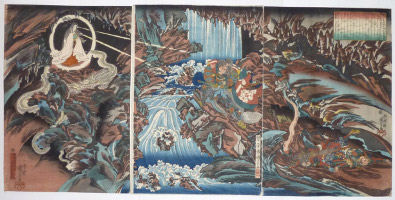
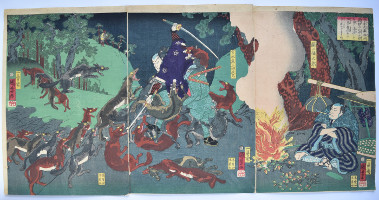
Click here to view image full size. A triptych showing Miyamoto Mushashi (c. 1584-1645) fighting a pack of wolves in the mountains of Hakone watched by Sekiguchi Yataro seated beside a fire. Musashi was a renowned double-bladed swordsman (as seen here) and is considered the sword-saint of Japan. Published by Kiya Sojiro, 4/1861 and is probably Kuniyoshi’s last print.     Very good impression and colour. Slight creasing, otherwise very good condition. Signed Ichiyusai Kuniyoshi ga.     Status: Sold

Utagawa KUNIYOSHI (1797-1861)

Click here to view image full size. Ono no Tofu (Michikaze) in court robes learns perserverance by watching the efforts of a frog to climb a branch of a willow tree. From a set Chuko meiyo kijin den, “Stories of Remarkable Persons of Loyalty and High Reputation.” Published c. 1845 by Enshuya Matabei. Robinson S35.10.     Fine impression and colour. Very good condition. Signed Ichiyusai Kuniyoshi ga.     Status: Sold    

Utagawa KUNIYOSHI (1797-1861)

Click here to view image full size. Six uncut double chuban sheets from a bat Chushingura set. Acts 1 to 6: Shodanme; Nidanme; Sandanme; Yodanme; Godanme; Rokudanme. Published c. 1847 by Ibaya Senzaburo. Of the utmost rarity: I cannot, at the moment, locate other examples from this set.     Fine impressions and colour. Vertical centre folds, otherwise fine condition. Signed Ichiyusai Kuniyoshi ga on each sheet.     Status: Sold     Click here to view image full size. Click here to view image full size.

Utagawa KUNIYOSHI (1797-1861)

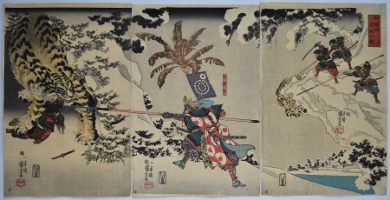
 Click here to view image full size. A triptych showing Kato Kiyomasa (Watonai) attacking a huge man-eating tiger in a snowy Korean landscape. Watonai tora-gari no zu. His henchmen tackle other tigers. This is one of his best known exploits in Korea, there being two expeditions in 1592 and 1597. Published by Yamashiroya Jimbei, c 1846. Robinson T183. A fine and rare design.   Fine impression, colour and condition. Full size. Signed Ichiyusai Kuniyoshi ga.   Status: Sold  
Utagawa KUNIYOSHI (1797-1861)

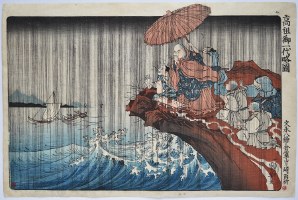
 Click here to view image full size. The priest Nichiren standing on the rocky promontory at Reizan in Kamakura and having his prayers for rain answered. The event occurred in 1271. His disciples surround him and protect him from the deluge with a large umbrella. Bunei hachi Kamakura Reizan-ga-saki uki. The second best design from Koso [ Nichiren ] goichidai ryakuzu, “Illustrated Abridged Biography of the Founder.” Nichiren ( 1222 – 1282 ) was the founder of the Buddhist Nichiren sect ( Nichiren shu – Kuniyoshi being a follower ) and indeed the set of ten prints may have been commissioned to mark the 550th anniversary of his death. Published by Iseya Rihei c 1831.   Fine impression and colour. Small repaired binding holes in right margin, otherwise fine condition. Full size with ample room on top border for the umbrella which protrudes beyond the border and is notorious for being trimmed. Signed Ichiyusai Kuniyoshi ga.   Status: Sold  
Utagawa KUNIYOSHI (1797-1861)

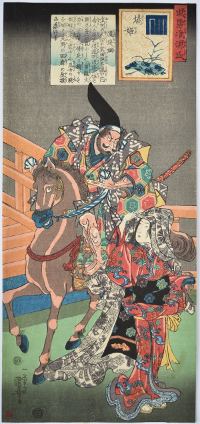
Hashihime from Buyu nazoraye Genji, “Heroic Comparisons for the Chapters of Genji.” Shows Watanabe no Tsuna on horseback and the demon-woman Ibaraki at the Modori bridge, Ichijo, Kyoto. An o-tanzaku set published by Iba-ya Sensaburo, c 1843. The fifty-four Chapters of Genji, the Genji Monogatari, was a tenth century romance by Murasaki-Shikibu. In this version of the story Watanabe is enchanted by a beautiful young woman, but his suspicions are aroused and then confirmed when he sees her reflection in the river which reveals her true demonic self. The outcome of this version is the same with Ibaraki’s arm being cut off.   Very fine impression, colour and condition. Signed Ichiyusai Kuniyoshi ga.   Status: Sold  

Utagawa KUNIYOSHI (1797-1861)

 Click here to view image full size. Tametomo at the age of thirteen catching the arrows shot at him by two of the Emperor’s guard in a competition with Shonagon Nyudo Shinsei. From a set: Tametomo homare no jikketsu, “Ten Famous Excellencies of Tametomo.” The set published by Aritaya Seiyemon, c 1848-51.   Extremely fine impression, colour and condition. Signed Ichiyusai Kuniyoshi ga.   Status: Sold  
Utagawa KUNIYOSHI (1797-1861)

 Click here to view image full size. Takeda Shingen seated and holding a war-fan and rosary and fully armoured. From a series: Meiko hyaku yu den, “Stories of a Hundred Heroes of High Renown” published by Idzumiya Ichibei, 1843-4.   Very fine impression, fine colour and condition. Signed Ichiyusai Kuniyoshi ga.   Status: Sold  
Utagawa KUNIYOSHI (1797-1861)

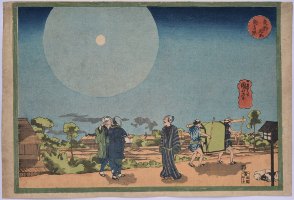
 Click here to view image full size. The Shin Yoshiwara from a Toto meisho “Famous Views of the Eastern Capital” set of 10 prints published by Kagaya Kichibei, c. 1831. The “Shin” or “New” Yoshiwara was so named after its relocation after a fire in 1657. It can be seen in the distance. In the foreground are late night travellers on the Nihon embankment. The scene is dominated by the moon and its huge halo. The set uses Europeanised elements, most evident in his landscape prints as well as a few other series and some surimono. Extremely rare.   Fine impression and colour. Another state has a line printed around the moon. The green border intact which is rare on this set as it is often trimmed, sometimes completely. Slight soil, otherwise very good condition. Signed Ichiyusai Kuniyoshi ga.   Status: Sold  
Utagawa KUNIYOSHI (1797-1861)

 Click here to view image full size. Minamoto Tametomo (1139-70) decapitating Yamaotoko from a set of ten prints: Tametomo homare no jikketsu, “Ten Famous Glories of Tametomo.” A great archer (it being said that his left arm was four inches longer than his right), and a wild and colourful character. The story shown here relates how Tametomo, while exiled to the island of Izu Oshima, discovers a nearby island inhabited by creatures with a demon-like countenance, red faces and long red hair hanging over their foreheads. He eventually subjugates the devils and is regarded as a king by the islanders. Published by Aritaya Seiemon, 1847-50.   Fine impression, colour and condition. Signed Ichiyusai Kuniyoshi ga.   Status: Sold  
Utagawa KUNIYOSHI (1798-1861)

 Click here to view image full size. Satomi Jibu-no-taifu Yoshizane, a daimyo in control of Takita Castle from Satomi Hakkenden, the eight heroes of Bakin’s novel Hakkenden. Published by Mikawa-ya Tetsugoro, c 1849-51. See the Kunichika triptych of the same subject on this current selection. Very good impression, colour and condition. Signed Ichiryusai Kuniyoshi ga. Status: Sold

Utagawa KUNIYOSHI (1798-1861)

 Click here to view image full size. Nitta Tadatsune encountering the goddess of Mount Fuji and her dragon in a cavern with numerous stalactites and a fast flowing river and waterfall. She complimented Tadatsune on his courage while his compatriots were stricken with terror. Statues of the goddess Kwannon ( Chin: Guanyin ) are often found in caves. Published by Tsuji-ya Yasubei, c. 1844. Robinson T143. A fine design. Very good impression, colour and condition. Signed Ichiyusai Kuniyoshi ga. Status: Sold
Utagawa KUNIYOSHI (1797-1861)

 Click here to view image full size. Araki Matayemon standing, examining his sword from Honcho kendo ryaku den, “Abridged Stories of Our Country’s Swordsmanship.” The set published by Kadzusaya Iwazo in c 1845-6.   Extremely fine impression, colour and condition. Solid yellow ground. Signed Ichiyusai Kuniyoshi ga.   Status: Sold